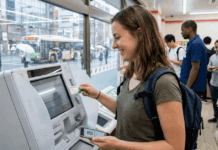
Travelers often need to access local currency quickly and safely. 7-Eleven ATMs are a popular choice for this, especially across Asia and parts of North America.
This guide is for anyone who wants to use foreign credit cards at 7-Eleven ATMs. It covers key fees, transaction limits, and smart strategies to avoid common pitfalls.
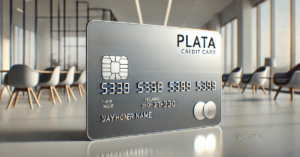

Where 7-Eleven ATMs Accept Foreign Credit Cards
7-Eleven stores can be found in places like Tokyo, Bangkok, Taipei, and even some US cities.
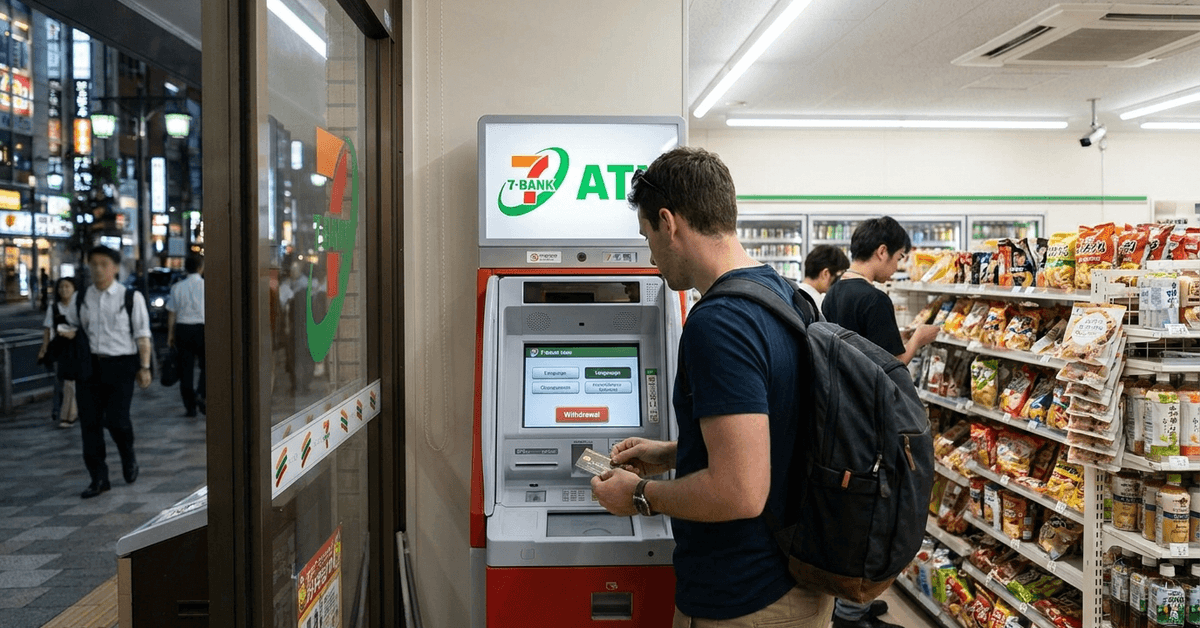
Most 7-Eleven ATMs in countries like Japan and Thailand do accept Visa, MasterCard, and some international debit cards.
Popular Cities with 7-Eleven ATMs
- Tokyo, Osaka, Kyoto (Japan)
- Bangkok, Chiang Mai (Thailand)
- Taipei (Taiwan)
- Singapore
- Hong Kong
Acceptance can still vary by country, so it is wise to check before traveling.
What Types of Cards Work?
- Visa and MasterCard: Most widely accepted
- Maestro: Commonly works, but check for Maestro logo
- American Express: Rarely accepted at 7-Eleven ATMs in Asia
Using a contactless card is sometimes possible, but most ATMs require chip-and-PIN.
Understanding Fees at 7-Eleven ATMs
Foreign cardholders often pay two main fee types at 7-Eleven ATMs:
- ATM Operator Fee: Charged by the ATM itself per transaction
- Issuer Fee: Charged by your bank or card provider
Typical Fee Ranges by Country
- Japan: 110 to 220 yen per transaction (about $0.80–$1.60 USD)
- Thailand: 220 baht (about $6–$7 USD) per withdrawal
- Taiwan: Around 100 NTD ($3 USD) per transaction
Card issuers may also add a foreign transaction fee of 1 to 3 percent.
Exchange Rates and Dynamic Currency Conversion
Some ATMs offer to convert your withdrawal to your home currency at the point of transaction.
Local currency withdrawals often provide a better rate, since dynamic currency conversion can carry higher fees.
Withdrawal Limits at 7-Eleven ATMs
Each ATM has built-in daily and per-transaction limits, which differ by country and bank.
Japan Withdrawal Limits
ATM withdrawal limits in Japan can vary depending on the card issuer, ATM network, and individual account settings. Checking both the ATM limit and your bank’s daily withdrawal allowance can help prevent declined transactions.
- Most 7-Eleven ATMs allow up to 100,000 yen per withdrawal (about $700 USD)
- Some machines restrict to 30,000 yen per transaction for certain cards
Thailand Withdrawal Limits
Withdrawal limits in Thailand depend on the ATM operator and card provider, with individual transactions often subject to local restrictions. Additional international withdrawal or currency-conversion fees may also apply.
- Limits are usually set at 20,000 baht per withdrawal (about $550 USD)
- Some cards may only be able to withdraw less per transaction
Other Countries
Withdrawal rules can differ considerably across countries and ATM networks.
In destinations such as Singapore and Hong Kong, the maximum amount per transaction may depend on both local ATM policies and the limits established by your card issuer.
- Singapore and Hong Kong often allow 10,000 to 20,000 units of local currency per transaction
Your card issuer might impose a lower daily limit, so it's important to check in advance.
Step-by-Step Guide: Withdrawing Cash from 7-Eleven ATMs
- Insert your card (chip-first) into the 7-Eleven ATM slot.
- Select your preferred language from the on-screen menu.
- Choose “Withdrawal,” then select “Checking” or “Savings” if prompted (credit cards often work with “Checking”).
- Enter the amount you want to withdraw, checking it does not exceed ATM or card limits.
- Review all fees displayed on-screen before confirming the transaction.
- Enter your card PIN when prompted and confirm withdrawal.
- Take the cash, receipt, and your card before leaving.
If the ATM declines the transaction, try a smaller amount or select a different account type.
Best Practices for Safer and Cheaper Withdrawals
Following a few practical steps can help reduce ATM fees, exchange-rate costs, and security risks when withdrawing cash at home or abroad.
Withdraw Larger Amounts Less Often
Since every transaction carries a flat fee, making fewer, larger withdrawals can reduce overall costs.
Avoid Dynamic Currency Conversion
It is usually better to withdraw in the local currency and let your own bank handle the exchange rate.
Monitor Account and Exchange Rates
Keeping track of your account balance and current exchange rates can help you understand withdrawal costs and avoid unexpected conversion charges while traveling.
- Track your balance with mobile apps from your home bank
- Currency conversion apps like XE or Wise can help check real-time exchange rates
Look for ATM Security Signs
A quick security check before using an ATM can help reduce the risk of card skimming, PIN theft, or suspicious transactions. Choosing well-lit, monitored locations can provide additional protection.
- Inspect the ATM for suspicious devices
- Cover the keypad when entering your PIN
- Use ATMs inside 7-Eleven stores for camera coverage and extra safety
Time Your Withdrawals Carefully
7-Eleven ATMs are available 24/7 in most urban locations, but cash replenishments may occur at different hours.
In tourist-heavy cities, early mornings and late evenings may see less foot traffic and faster transactions.
Useful Digital Tools and Apps
Several resources can make 7-Eleven ATM use easier and smarter:
- SoftBank ATM Locator (Japan-specific): Helps find nearest 7-Eleven ATMs in Japanese cities.
- Google Maps: Offers user reviews and 7-Eleven store details worldwide.
- Currency conversion apps such as XE for tracking exchange rates.
Important Limitations and Potential Issues
ATM withdrawals can involve transaction limits, additional fees, exchange-rate differences, and card compatibility restrictions. Understanding these potential issues beforehand can help reduce unexpected costs or declined transactions.
Blocked Transactions
Some banks automatically block foreign ATM use for fraud prevention. Contact your bank before traveling to activate international access.
Unplanned Charges
Monitor for double charges or unexpected currency markups, especially if the ATM session timed out or if a withdrawal was cancelled.
ATM Availability Issues
In smaller towns or rural locations, 7-Eleven ATMs might not be available 24/7 or could run out of cash after peak hours.
Conclusion: Making the Most of 7-Eleven ATMs Abroad
7-Eleven ATMs offer convenient access to local currency for travelers, but it is important to be aware of fees, limits, and potential risks.
Checking with your card provider, understanding local costs, and using smart apps like XE or the SoftBank locator can make your experience much smoother.
Planning ahead helps avoid extra charges and keeps your money safe. For more guides, consider exploring related topics on using credit cards and ATMs while traveling internationally.