
In periods of shutdowns, policy shifts, or paperwork gaps, benefits can pause without much warning.
If a notice arrives or payments fail to load, act immediately to keep food on the table and prevent an avoidable lapse.



The phrase stop SNAP benefits at any moment reflects real risk during fast rule changes or missed recertifications, so preparation matters. Accurate information, fast responses, and trusted sources will stabilize your case and protect your household’s budget.

Immediate Actions If Benefits are Threatened
Unexpected letters, portal flags, or zero balances call for same-day moves that preserve eligibility and speed up fixes.
Acting within official timelines often keeps aid flowing through continued benefits while decisions are reviewed.
Caseworkers can correct simple data mismatches quickly when documents are ready and contact details are current. Appeals windows are firm, so calendar every date on the notice.
- Contact your caseworker now: Call or message through the state portal and ask what resolves the hold fastest; many issues clear within one cycle when verification lands promptly.
- Submit documents without delay: Upload pay stubs, ID, rent, utilities, and any requested proof in the exact format your portal accepts.
- Document work compliance: If subject to work rules, keep hours, exemptions, and E&T paperwork ready for upload, reflecting any recent SNAP work requirements update 2025 notices.
- File an appeal quickly: Households generally have 90 days to request a fair hearing after an adverse action; decisions are typically due within defined federal timeframes.
- Check official alerts: State pages, 211, and emergency SNAP benefits guidance from agencies or governors’ offices will flag temporary process changes or extensions.
How Rules and Work Requirements Affect Your Case
SNAP is a federal program administered by states, so national rules set the floor while state agencies run intake, screening, and recertifications.
Two work rule frameworks exist: general work requirements and ABAWD rules, each with exemptions for age, disability, caretaking, and other factors.
States can broaden exemptions during disasters or adopt additional employment services, and they publish updates that apply to re-certifying households and new applicants alike. Checking the state portal weekly during policy change periods prevents surprises at issuance.
Appeals and Fair Hearings: Timelines that Protect Benefits
Adverse actions such as denials, closures, or benefit cuts can be appealed through a fair hearing request.
Federal regulation allows households to request a hearing for actions in the prior 90 days, and states must conduct and decide hearings within set time limits once a request is filed.
Continued benefits may be available if the appeal is requested before the effective date shown on the notice, subject to state policy. Read the notice closely, file quickly, and upload any missing verification referenced in the adverse action.
Finding Food and Help Today
Shortfalls happen even when paperwork is perfect, so line up stopgaps immediately. National helplines and food bank networks can connect you to groceries within days, often the same week.
These tools also help caregivers, seniors, and students locate nearby services. Search once, then save numbers to your phone for fast reuse.
- Dial 211: Ask for pantries, mobile markets, and emergency distributions, or text and chat through your state’s 211 site.
- Use Feeding America’s locator: Enter a ZIP code to reach the nearest member food bank and affiliated pantries.
- Call the USDA National Hunger Hotline: Ask for programs by county and language; hours run weekdays with bilingual support.
- Note local options: Community centers, churches, and municipal sites publish weekly distribution calendars that change frequently.
- Save the phrase “find local food banks 211.” Use it as a quick search cue on any device when traveling or relocating.
EBT Card Basics: Apply, Use, Protect
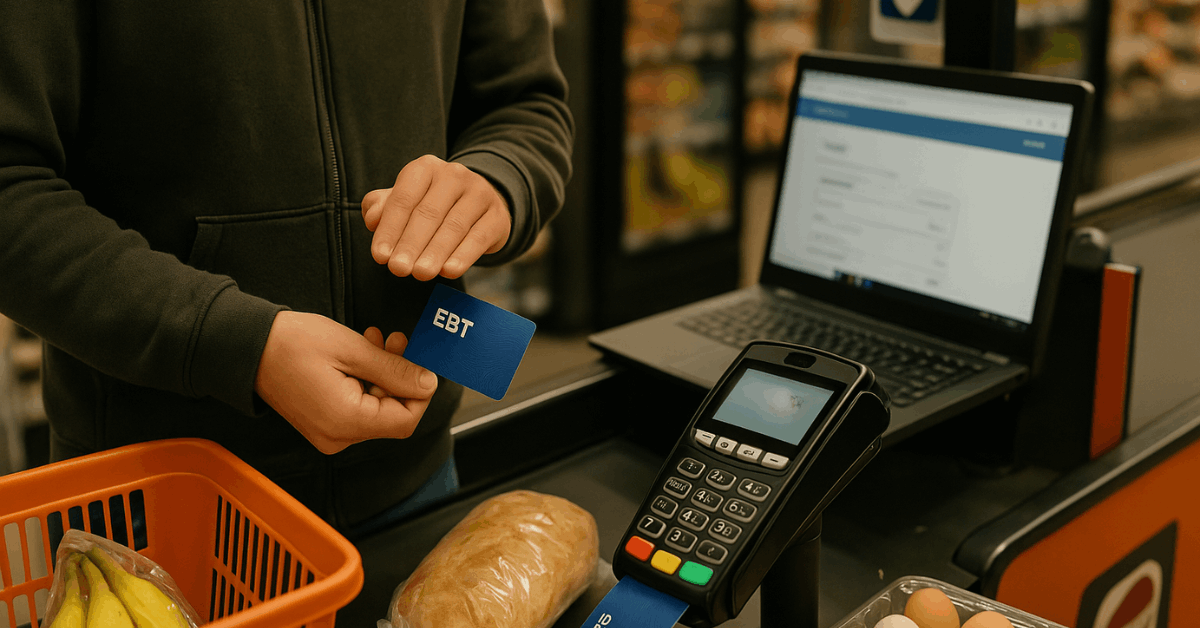
Most households access SNAP using an Electronic Benefit Transfer card that functions like a debit card for eligible foods.
States manage card issuance, balance tools, and replacement workflows; some also enable online purchases with specific retailers. Security matters because card skimming and related theft have targeted EBT users nationwide.
What The EBT Card Is
An EBT card stores monthly SNAP funds electronically and can also deliver cash benefits for programs such as TANF in some states.
Using the card at authorized retailers requires a PIN, and balances carry over month to month during an active certification period.
Online purchasing is available where the USDA pilot lists participating retailers and states, so check approved options before checkout.
Where You Can Use It
Authorized grocery stores, many farmers markets, and certain online retailers accept SNAP; some states also support incentive programs that stretch produce spending.
Massachusetts, for example, runs HIP to put money back on the card for qualifying local produce and offers EBT Card to Culture discounts at museums through its DTA. Other states operate different incentives, so confirm details locally.
Check Your EBT Card Balance
State portals, mobile apps, receipts, and IVR phone lines provide real-time balances and recent transactions. Search your state benefits site or portal section labeled balances to check EBT card balance before shopping, especially near month-end.
Protect Against EBT Skimming
Card skimming remains a national issue, and USDA is modernizing EBT security, including chip-card efforts in coordination with states.
Replacement policies for stolen benefits shifted in late 2024 and 2025, so read your state’s current guidance and report theft immediately.
Store the card, cover the keypad, and change the PIN after any suspected compromise to protect against EBT skimming.
Eligibility, Documents, nd Online Application
A fast, accurate application reduces back-and-forth and speeds the interview. Income and resource limits are set federally, implemented by states, and checked against household composition and allowable deductions.
Non-citizen eligibility follows federal rules, while students, seniors, and people with disabilities have additional provisions and proofs. Use official tools and state checklists to avoid common omissions.
Eligibility Snapshot
States apply federal income and resource thresholds, plus state-specific rules for deductions, shelters, and vehicles.
ABAWD and general work requirements apply only to certain adults and include exemptions that change over time, so monitor the state portal for updates. When in doubt, run a pre-screen or call the local office before submitting.
Documents To Prepare
Gather photo ID, Social Security numbers for household members, proof of income or zero income, rent and utility bills, childcare costs, medical expenses for elderly or disabled members, and bank information if requested.
Clear uploads in accepted formats reduce follow-up requests and speed decisions within standard processing windows.
Online Application Steps
Start at the state’s benefits portal, create an account, complete the application carefully, upload proofs, and submit.
Watch for an interview request, which often occurs by phone, and reply to any verification requests quickly through the portal.
Many states publish a USDA SNAP eligibility tool link or pre-screener on their sites to estimate potential approval and benefit levels.
Recertification, Reporting Changes, and Staying Compliant
Households must report changes and complete recertification on time, commonly every six or twelve months, depending on the certification type.
Missed forms, interviews, or income updates cause closures that feel sudden, even though notices were issued earlier. Set calendar reminders labeled SNAP recertification deadline rules to prevent late submissions and keep a shared folder for pay stubs and bills.
If moving across state lines, reapply in the new state since benefits do not transfer automatically.
If Benefits Stop or Are Denied
A denial or closure letter lists the reason and the appeal window, which generally allows how to appeal SNAP denial within 90 days.
Request continued benefits when eligible, fix missing documents, and upload anything the notice lists as insufficient.
If the portal shows no movement after several business days, call the office, reference the notice number, and ask what completes the file. File the fair hearing request within the deadline and keep copies of every submission.
Advocacy And Policy: Keep Pressure on Funding nd Access
Stable funding, accurate data systems, and strong anti-fraud tools keep benefits predictable and efficient.
Contact federal and state representatives to support full SNAP funding, modernized EBT security, and clear communications during disruptions.
Community organizations and legal aid groups can help escalate complex cases during broader policy shifts or shutdowns. Consistent advocacy protects households when rules change quickly.
Conclusion
Act immediately, keep documents organized, and use official portals to stop preventable SNAP interruptions.
Calendar every deadline, respond to notices the same day, and request continued benefits when eligible.
Call your caseworker for exact fixes, upload verification promptly, and file a fair hearing if needed. Line up food banks and hotlines now, so groceries arrive while paperwork issues get resolved.
Last updated on May 18th, 2026 at 04:03 pm