The EPOS card you keep hearing about in Spain isn't one specific product. It's a category. EPOS stands for Electronic Point of Sale, and the cards carrying this label can be credit, debit, or prepaid products issued by banks like BBVA, Santander, and CaixaBank.
A BBVA Aqua Más credit card charges a 21.76% APR on unpaid balances. A prepaid card from the same bank has zero credit risk but also zero credit-building power.


This guide is written for expats and long-term foreign residents trying to figure out which EPOS card type makes sense for daily spending in Spain. If you moved here on an NIE and you're still sorting out banking, this one's for you.
How EPOS Cards Work in the Spanish Payment System
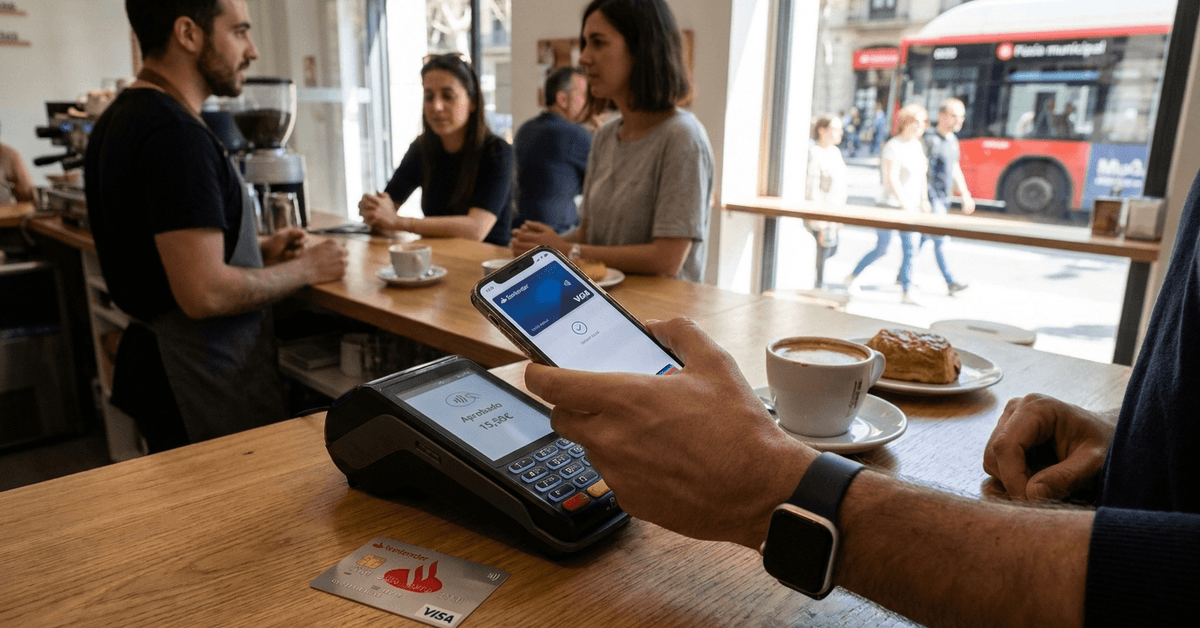
Spain's card market is mature. Cards accounted for 62% of payment volume in 2024, roughly €402 billion. Over 90% of Spanish cards and terminals support tap-to-pay, and the contactless limit sits at €50.
An EPOS card plugs into this system through Visa or Mastercard networks. The card itself functions at any contactless terminal, online checkout, or ATM. The differences between EPOS card types are all about what happens after you tap.
Credit EPOS Cards and the APR Trap
Credit EPOS cards give you a spending limit and a monthly statement. Pay the full balance each month, and interest costs nothing. Carry a balance, and things get expensive fast.
BBVA's Aqua Más credit card, one of the more popular mid-tier options, carries a NIR of 19.80% and an APR of 21.76% on balances up to €1,500. That's the real number. Not a promotional rate.
I would flag the Aqua Más specifically because it's marketed as a travel-friendly card with installment plans. Those installment plans look appealing until you run the math on a €1,500 balance over 48 months: the total repayment comes to €2,183.52. That's €683 in interest alone.
Debit EPOS Cards: Simple but Limited
Debit EPOS cards pull directly from your bank account. No credit line, no interest charges, no risk of spiraling debt. For day-to-day groceries and transport, a debit card does the job cleanly.
The limitation shows up when you travel or rent a car. Many rental agencies and hotels outside Spain require a credit card hold, and a debit card won't work for that. If you never leave the country, this might not matter.
But for expats who fly home regularly, it creates friction at the worst possible moment.
Prepaid EPOS Cards Aren't Always the Safe Bet
I think the advice that prepaid cards are the safest option for online shopping gets repeated too uncritically. The Banco de España itself promotes prepaid cards as ideal for online purchases because your loss is limited to the loaded amount.
But a prepaid card also means no purchase protection, no chargeback rights under many issuers, and no credit history building. If a merchant doesn't deliver and you paid with a prepaid card, your recourse is weaker than with a credit card.
The "safety" argument only holds if fraud is your only concern. For a €400 electronics purchase that arrives broken, a credit card's chargeback process is the safer option.
Fees That Change the Math on Spanish EPOS Cards
The card itself might be free. The fees around it are where providers make money, and where most comparisons fall short.
ATM Withdrawal Costs at BBVA
Cash withdrawals on credit at BBVA Group ATMs in Spain cost 3.50%, with a minimum of €3. At non-BBVA ATMs in Spain, you pay the ATM owner's fee plus 3.50%. Outside Spain, the fee jumps to 5%.
Pulling €200 from a non-BBVA ATM on credit could cost you €10 or more in a single transaction. That adds up if you rely on cash for weekend markets or small-town shops that don't take cards.
Annual Fees and How to Dodge Them
BBVA's Negocios credit card charges €48 per year starting in the second year, but waives the fee if annual charges exceed €1,500.
That's €125 per month in spending to avoid the fee. For an active user, it's manageable. For someone who only uses the card occasionally, it's a trap.
The cards worth comparing on fees include:
- BBVA Aqua Más: no annual fee, but a 3% surcharge on non-euro transactions above €300/month
- WizInk Now: no annual fee and no requirement to switch banks, with a 9.92% interest rate on purchases up to €2,000
- BBVA Platinum: no annual fee for private banking customers, with accident insurance up to €1,250,000 and zero currency exchange fees
| Card | Annual Fee | APR | Foreign Transaction Fee | ATM Abroad |
|---|---|---|---|---|
| BBVA Aqua Más | €0 | 21.76% | 3% over €300/month | 5% (min €3) |
| WizInk Now | €0 | 9.92% | Varies | Varies |
| BBVA Platinum | €0 (Private Banking) | 15.95% | 0% | 0% |
The WizInk Now card has the lowest interest rate of the three, but it lacks travel insurance. The Platinum card wins on perks but requires private banking status.
The 2026 Tax Reporting Rule Nobody's Talking About
Starting January 1, 2026, all banks in Spain must report the total volume of card transactions to the Agencia Tributaria whenever combined yearly spending exceeds €25,000.
For the average consumer, the threshold works out to roughly €2,083 per month. If you're an expat putting rent, groceries, and flights on a single card, hitting that number isn't hard.
This doesn't mean you owe extra tax. It means Hacienda now sees your spending patterns and can flag discrepancies between declared income and card activity. For self-employed workers, every single card payment received gets reported with no minimum threshold.
No EPOS card guide I've found mentions this rule. But it changes how you might think about splitting spending across cards or keeping some purchases in cash.
Applying for an EPOS Card as a Foreign Resident
The application process differs depending on card type. Credit cards face the most scrutiny. Prepaid cards face the least.
Documents Every Provider Will Ask For
Spanish banks expect a consistent set of paperwork:
- DNI or NIE: your government-issued ID number
- Empadronamiento: proof of registered address
- Income proof: payslips, tax returns, or a work contract
- Bank statements: typically the last three months
Students may need enrollment certificates. Self-employed applicants should have their quarterly tax filings (modelo 130) ready.
Credit Checks and the CIRBE Database
For credit EPOS cards, Spanish lenders check the CIRBE (Central de Información de Riesgos del Banco de España), which tracks all outstanding debts above €1,000. If you have an existing mortgage, car loan, or credit line, it shows up here.
A clean CIRBE report doesn't guarantee approval. But a messy one almost guarantees rejection.
Spain's Council of Ministers approved a draft bill in January 2026 to tighten consumer credit rules, which may make approvals stricter for high-APR revolving cards later this year.
Prepaid and Debit Cards: Faster, Fewer Questions
Prepaid cards often skip the credit check entirely. A valid NIE and a phone number may be enough. Debit cards tied to a current account usually activate within 48 hours of account opening.
The tradeoff is clear: less paperwork, less purchasing power. Decide which matters more based on your spending patterns, not on what a comparison site defaults to recommending.
Questions People Ask About EPOS Cards in Spain
A few searches come up over and over about EPOS cards in the Spanish market. These answers add context beyond the main sections above.
- Q: Can I get an EPOS card in Spain without a Spanish bank account?
Some prepaid cards from fintechs like Revolut or N26 don't require a traditional Spanish bank account. But credit and debit EPOS cards from BBVA, Santander, or CaixaBank will require an account with that bank. The fintech route skips the branch visit entirely. - Q: Do EPOS cards in Spain work abroad?
Yes, through Visa or Mastercard networks. But watch the fees. Non-euro purchases on BBVA cards cost 3% on amounts exceeding €300 per month unless you have a premium travel pack. Platinum and Aqua Máxima cards waive this fee. - Q: Is there a spending limit on contactless EPOS card payments?
The PIN-free contactless limit in Spain is €50 per transaction. Above that, the terminal will ask for your PIN. Some banks also set daily contactless ceilings, typically between €150 and €200 per day.
Conclusion
The right EPOS card in Spain depends on three things: your residency status, your monthly spending volume, and whether you travel outside the eurozone.
No single card wins on all three fronts, and the 2026 tax reporting rules add a new layer to consider. Check current terms directly on BBVA's card comparison page or the Banco de España consumer portal before applying.
The fine print changes faster than any guide can keep up with, so treat your card choice as a decision you revisit every 12 months.
Last updated on September 23rd, 2026 at 02:32 pm