
The PayPay Card is a Japanese fintech product. And the first thing most guides about it in Spain get wrong is pretending it already has a full local rollout.
PayPay has 71 million registered users and acceptance at over 4.1 million merchants. All of them are in Japan. So if a Spanish site tells you to just download the app and apply, they're skipping the part that trips everyone up.
This guide is for Spanish residents who want access to PayPay's card and payment ecosystem, whether for travel to Japan, cross-border purchases, or genuine curiosity about one of Asia's biggest fintech platforms.
PayPay Card Is a Japan-First Product. That Changes the Whole Application.
The biggest misunderstanding floating around Spanish-language fintech blogs is that PayPay operates like Revolut or N26 in the European market. It does not.
PayPay is owned by SoftBank and Yahoo! Japan, and its card arm (PayPay Card) issues Visa and JCB credit cards through Japanese banking infrastructure.
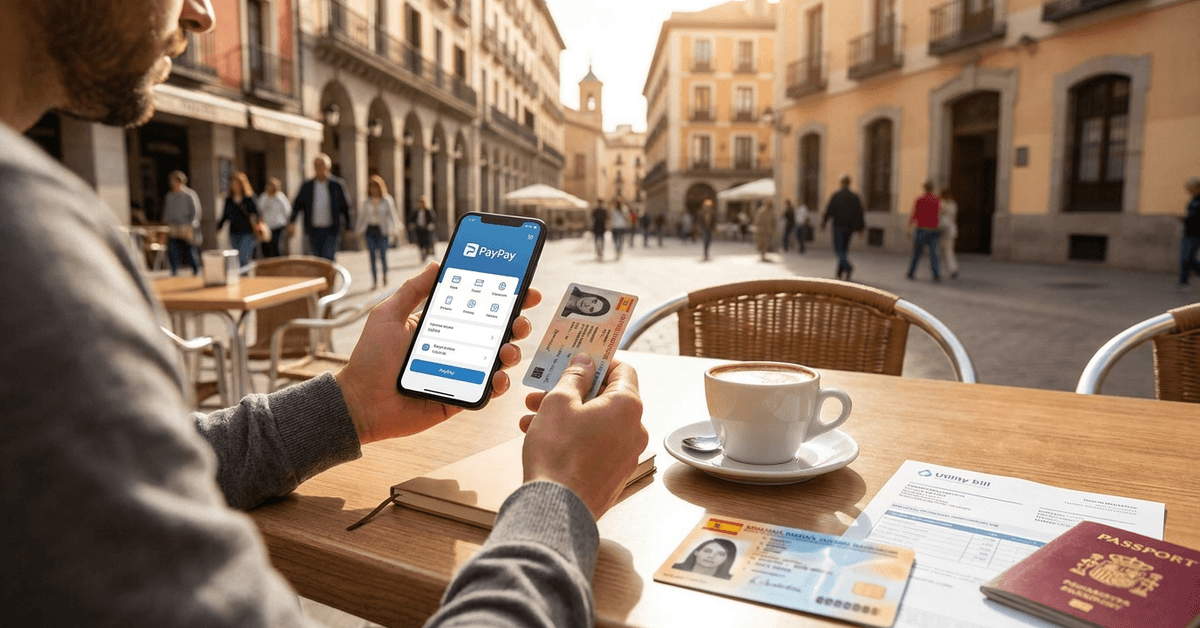
That distinction matters for one reason: eligibility rules are tied to Japanese residency, not EU residency. Spanish residents cannot simply open a browser, fill out a form, and receive a PayPay Card at their Madrid apartment.
So Can a Spanish Resident Get a PayPay Card at All?
The short answer: only if you have a connection to Japan. The longer answer depends on your situation.
PayPay Card applications require a Japanese phone number and a Japanese address for card delivery. There is no English-language application portal for the card itself, though the PayPay app has an English mode buried in settings.
Foreigners Living in Japan
Spanish nationals living in Japan on a work visa, student visa, or spouse visa can apply. The process starts inside the PayPay app and requires identity verification using a residence card (在留カード). Approval can take a few days to a week.
Spanish Tourists Visiting Japan
Tourists can register for the PayPay app and use QR-code payments at participating merchants.
But PayPay Card, the credit card product, is not available to short-term visitors. Linking a foreign-issued Visa or Mastercard directly to PayPay for top-up also fails in most cases.
Remote or Digital Nomad Setups
I would flag this as the most misunderstood scenario. A Spanish digital nomad who splits time between Barcelona and Tokyo cannot apply for PayPay Card during a tourist stay.
The card requires a fixed Japanese address and a phone number registered to a Japanese carrier.
The Actual Application Steps (For Those Who Qualify)
The application itself is straightforward once you clear the eligibility hurdle. It runs entirely through the PayPay mobile app.
Step one is downloading PayPay from the App Store or Google Play and registering with a Japanese mobile number. SMS verification happens during this step, and some carriers delay the confirmation code by a few minutes.
Identity Verification Through eKYC
After registration, the app walks you through eKYC (electronic Know Your Customer) verification.
This involves photographing your residence card and taking a selfie. The system matches facial recognition against the ID photo. Processing takes anywhere from a few hours to three business days.
Requesting the PayPay Card Inside the App
Once your PayPay account is fully verified, a card application option appears in the app menu. The form asks for:
- Full legal name as it appears on your residence card
- Japanese residential address
- Annual income (self-reported, but affects credit limit)
- Employment status and employer name
The issuing bank runs a credit check using CIC (Credit Information Center), Japan's main credit bureau. Spanish residents new to Japan often have no Japanese credit history, which can lead to lower initial credit limits or rejection.
Approval, Delivery, and Activation
Approval notifications arrive through the app. The physical card ships to the registered Japanese address, typically within one to two weeks.
Activation happens by entering a code through the PayPay app. A virtual card number becomes available immediately after approval, so purchases can start before the plastic arrives.
PayPay Card Cashback and Fees vs. Spanish Fintech Cards
I think the cashback structure on PayPay Card is more aggressive than anything Revolut or N26 offers in Spain right now.
The base rate is 0.5% on all purchases, but linking PayPay Card to the PayPay app bumps that to 1.5% standard cashback in PayPay Points.
The real kicker is the campaign system. PayPay runs regional and seasonal cashback events that push returns to 20% or even 30% at participating merchants. No Spanish fintech card runs promotions at that scale.
| Feature | PayPay Card (Japan) | Revolut (Spain) | N26 (Spain) |
|---|---|---|---|
| Base cashback | 0.5% (1.5% linked) | None on standard | None on standard |
| Campaign cashback | Up to 30% | Occasional offers | Rare |
| Annual fee | ¥0 (free) | Free tier available | Free tier available |
| Foreign transaction fee | ~1.6% | 0% (weekdays, standard) | 0% (within limits) |
| ATM withdrawal abroad | Fees apply | Free up to limits | Free up to limits |
The tradeoff is obvious: PayPay Card only works well inside Japan's payment ecosystem. Those 30% cashback campaigns fire at Japanese convenience stores and restaurants, not Spanish supermarkets.
I Disagree That Spanish Residents Should Chase PayPay for Travel Savings
A lot of fintech blogs suggest getting a PayPay Card if you travel to Japan frequently. I think that advice fails a basic math test for trips under 30 days.
The setup cost in time (getting a Japanese phone number, a VPN-free Japanese address for delivery, and surviving a credit check with zero local history) outweighs the 1.5% cashback on a two-week trip's spending.
A Revolut or Wise card with 0% foreign transaction fees covers Japan purchases without any of that friction. The breakeven only makes sense for someone spending more than six months a year in Japan.
Security and Compliance: GDPR vs. Japan's APPI
Spanish residents accustomed to GDPR protections should know that PayPay operates under Japan's Act on the Protection of Personal Information (APPI), not EU data law.
APPI has been recognized by the European Commission as providing an adequate level of data protection, so cross-border data transfers between Japan and the EU are technically lawful.
Still, dispute resolution and fraud claims go through Japanese-language customer support channels. Freezing a card through the app is instant, which is one of PayPay's stronger features.
But filing a chargeback or contesting a transaction involves Japanese banking procedures, not the EU's Payment Services Directive protections.
Tax Reporting for Spanish Residents Using Japanese Payment Cards
Spain's Agencia Tributaria requires residents to report foreign bank accounts and financial assets exceeding €50,000 through the Modelo 720 declaration.
A PayPay Card with a low credit limit probably falls below that threshold, but the obligation to report exists regardless of balance.
Gig workers or freelancers routing Japan-based income through PayPay should keep records.
Spain's 2026 payment reporting rules are tightening, and digital wallet transactions are increasingly visible to tax authorities on both sides. The Agencia Tributaria website has current filing guidelines.
Questions People Ask About PayPay Card in Spain
Spanish residents searching for PayPay Card info tend to hit the same walls. A few answers that go beyond the surface.
- Q: Can I apply for a PayPay Card without living in Japan?
No. The application requires a Japanese phone number, a Japanese residential address, and identity verification through a Japanese residence card. There is no remote application option for EU residents. - Q: Does PayPay Card work for online purchases at Japanese stores from Spain?
A virtual PayPay Card number can be used for online purchases on Japanese e-commerce sites. But shipping to Spain depends on the individual retailer's international delivery policy, and currency conversion fees apply. - Q: Is PayPay the same as PayPal?
Completely different companies. PayPal is a US-based global payment processor. PayPay is a Japanese QR-code payment platform owned by SoftBank and Yahoo! Japan. The names sound similar, but there is zero corporate overlap.
Conclusion
The PayPay Card is a strong product inside Japan, but it was built for that market specifically. Spanish residents who qualify through Japanese residency can benefit from its cashback campaigns and zero annual fee.
For everyone else, the better move is a multi-currency card from a European fintech paired with cash for Japan trips. The smartest financial tool is the one that matches where you spend, not where you wish you could.