The Jidou Fuyou Teate is a government allowance designed to support single-parent households in Japan. Navigating the application process can feel difficult, especially for non-native speakers or first-time applicants.
This guide provides clear, practical advice and specific steps for applying, maximizing your chances of approval, and understanding related tools and resources. If you're a single parent or considering the process for someone else, the following information is for you.



What Is Jidou Fuyou Teate? Overview and Eligibility
Jidou Fuyou Teate means "Child Rearing Allowance" for single parents or households where one parent is absent. The program is overseen by each local city or ward office throughout Japan.
Key Eligibility Requirements
- You are raising a child under 18 years old (or under 20 if the child has a disability).
- Your household is single-parent, or the supporting parent has a severe disability or is missing.
- Both Japanese citizens and foreign residents with proper residence status can qualify.
- Your gross annual household income is below a certain threshold, with limits depending on the number of dependents.
If you are unsure, city offices in places like Tokyo, Osaka, or Fukuoka typically offer bilingual staff or translated guides to help check your status.
How Much Can You Receive? Allowance Details
The allowance amount varies by family size, income, and local government rules. Payments are usually made every four months directly to your bank account.
Current Payment Levels (As of 2024)
- Full benefit: Up to around ¥43,070 monthly for the first child
- Secondary children: Roughly ¥10,170 extra for the second child, ¥6,100 for others
- Partial payments: Reduced amounts if your income is above the lowest bracket
Local government websites provide simulators for rough estimates. For instance, Saitama City's English page explains brackets and example calculations.
Income Threshold Examples
- Single mother, one child: Less than around ¥1,920,000 per year
- Each additional child raises the threshold by about ¥380,000
Tax statements from the previous year determine eligibility. If confused, it is helpful to bring your latest income certificate to the ward office for confirmation.
Documents Needed for Application
The required paperwork is quite standard for most cities. Gathering everything early helps avoid application delays.
Main Items to Prepare
- Resident Card (zairyu card, if foreign national)
- My Number Card or Notification
- Passport for identity verification
- Income certificate (Gensen Choshu-hyo or municipal income statement)
- Supporting documents for divorce, separation, or custody, if relevant
Sometimes, additional proof might be needed if your situation is unique (such as domestic violence cases).
Step-by-Step Application Process
The Jidou Fuyou Teate application process is broadly similar across Japan, although forms, supporting documents, and local procedures can vary by municipality. Knowing what happens at each stage can make the process easier to manage.
1. Inquire and Gather Forms
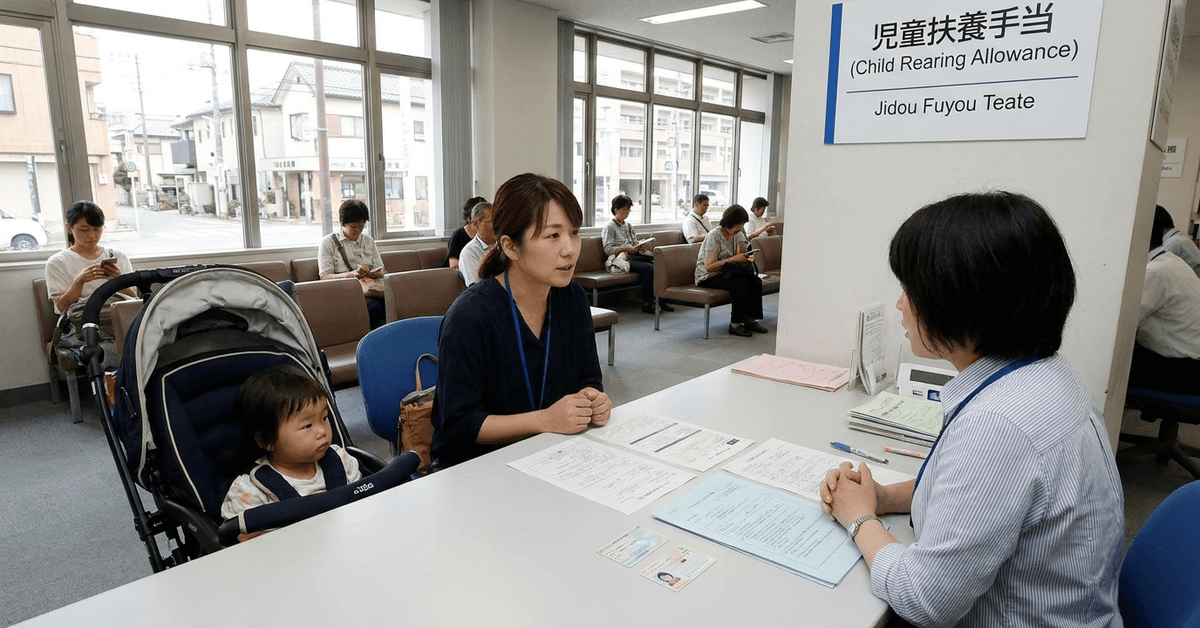
Start by contacting the child welfare or family-support section of your local city or ward office.
Staff can explain current eligibility rules, provide application forms, and confirm which documents apply to your household.
- Visit your local city hall (shiyakusho) or ward office (kuyakusho).
- Ask specifically for the Jidou Fuyou Teate application documents.
- Request a checklist of supporting records before leaving.
2. Fill Out and Submit Your Application
Take time to complete every section accurately because inconsistent or missing information can delay verification. Make sure the details on the form match your official residency, income, and family records.
- Complete each required section carefully.
- Attach all requested supporting documents.
- Use the municipality’s checklist to review the application before submission.
- Ask whether multilingual assistance is available if Japanese is difficult.
3. Complete Additional Verification
Some applications require additional questions or documentation before a decision can be made. This step allows officials to confirm family circumstances, income, residency, or caregiving arrangements.
- Be prepared to explain unusual household situations.
- Provide additional documents promptly if requested.
- Keep copies of anything submitted during follow-up.
4. Await Notification
After submission, the municipality reviews the application and determines eligibility. Processing times vary, so applicants should avoid assuming a fixed decision date.
- Monitor mail and other official communications regularly.
- Respond quickly if further information is requested.
- Keep your registered address current so important notices are not missed.
5. Review the Decision Carefully
Once processing is complete, the municipality generally sends a formal notice explaining the outcome. If approved, review the benefit amount, eligibility period, reporting duties, and payment schedule so you understand what happens next.
Useful Tools and Apps for Applicants
Leveraging digital tools can reduce confusion, especially for international residents or those uncomfortable with bureaucratic Japanese.
- Myna Portal lets you manage various benefit applications online and track status (Japanese-only interface for now).
- Google Lens or Papago for mobile photo translation of Japanese forms.
- Local expat group apps like Meetup or Facebook Communities in Tokyo, Kobe, or Kyoto, where parents often share direct experience.
- City guide apps (official city apps or third-party like Japan Life Guide) listing social welfare office contact info and walk-in times.
Tips to Maximize Approval and Payment
Want to give your application the best possible start? Accurate information, complete documents, quick follow-up, and careful attention to payment rules can make a real difference.
Stay Up to Date with Renewals
Keeping your benefit active requires attention even after approval. Recipients generally need to complete the annual Genkyou Todoke (current status report) during the designated August period to confirm continued eligibility.
Yokohama’s 2026 filing period, for example, runs from August 3 to August 31.
- Check your municipality’s annual renewal dates.
- Submit requested forms before the deadline.
- Keep copies of renewal documents and confirmations.
Keep Address and Status Updated
Changes in your household can affect eligibility or payment amounts. Reporting important updates promptly helps ensure that your municipal records and benefit information remain accurate.
- Report changes in address or household composition.
- Notify the municipality about marriage, remarriage, or other circumstances affecting eligibility.
- Provide updated income or employment information when requested.
Understand Additional Benefits
Jidou Fuyou Teate may be only one part of the support available to single-parent households.
Depending on the municipality and household circumstances, recipients may also qualify for medical-cost assistance, childcare support, school-related assistance, or other local programs.
Check with your city or ward office to identify related benefits and confirm whether separate applications are required.
Legal and Tax Considerations
Jidou Fuyou Teate payments are generally not counted as taxable income, but laws change and exceptions exist.
Other Rules to Know
Beyond the basic requirements, a few additional rules, reporting duties, exceptions, and local conditions can affect how the benefit works in practice.
- If remarrying, or if the absent parent returns to the household, you must report it right away.
- Receiving similar support from another country could affect benefit calculations. It is best to check with your city office if this applies.
Frequently Asked Questions
Still have questions? These frequently asked questions cover the key details applicants often want clarified, from eligibility and documents to payments and follow-up.
Can Non-Citizens Apply?
Foreigners with valid mid- to long-term visas and residency can apply. International single moms and dads in areas like Osaka or Nagoya have successfully navigated this process with city support.
What If My Income Changes?
If your salary rises above the threshold, the benefit may be reduced or stopped. If your income drops, contact the office promptly. Changes can sometimes reinstate or increase payments after re-verification.
Are There Appeal Options?
If denied, you can request a formal review and resubmit updated documents. City welfare desks will explain next steps according to their rules. Appeals are not uncommon, especially where unclear documentation is involved.
Conclusion
Applying for Jidou Fuyou Teate is easier with confirmed eligibility, complete documents, and guidance from the local welfare office.
Using official resources and asking for help when needed can make the process smoother and help eligible single-parent households access available support.