
A Domestic Violence Restraining Order (DVRO) can be a vital tool for personal safety. Navigating the process may feel overwhelming, but understanding each step helps to reduce stress.
This article is designed for anyone seeking clear, actionable guidance on how to request and officially deliver a DVRO in California.



Understanding a DVRO
A DVRO is issued by a court to protect someone from abuse or threats of abuse by a close relation, such as a partner or family member.
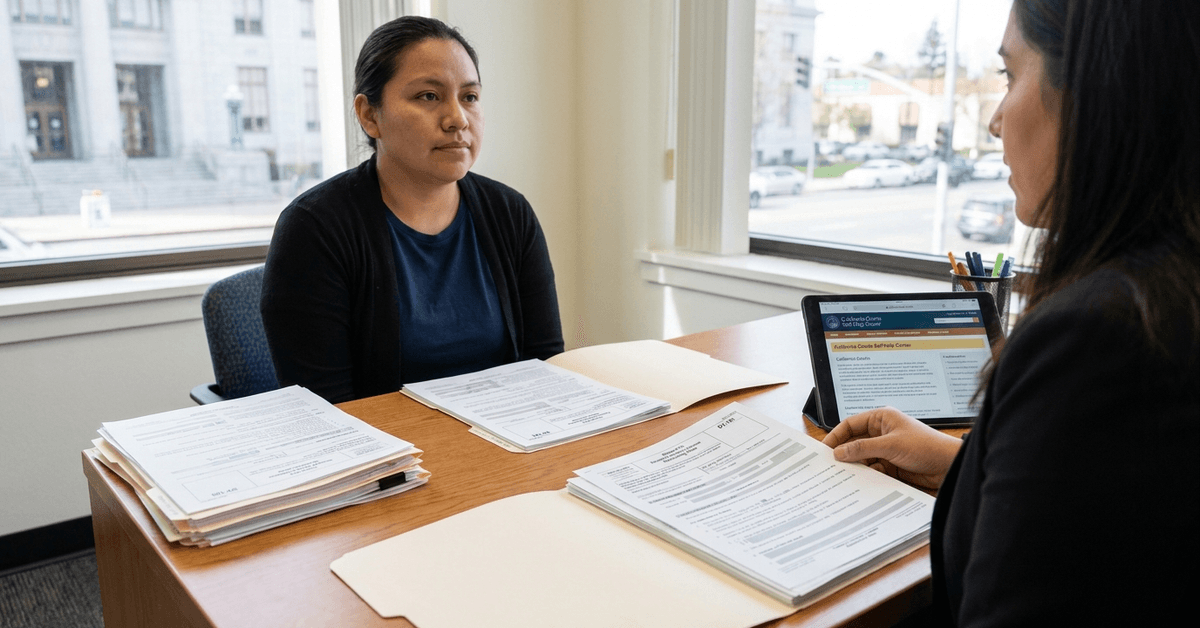
It can order the other person to stay away, move out, or avoid contact, depending on the specifics.
This legal tool is available in cities like Los Angeles, San Diego, and San Jose as well as across smaller counties.
Who Qualifies for a DVRO?
Eligibility for a DVRO includes those abused by:
- A spouse or ex-spouse
- A dating partner
- The parent of a shared child
- A close family member such as a parent or sibling
It specifically applies when the relationship with the abuser matches legal definitions found in California Family Code sections 6200-6409.
How to Apply for a DVRO in California
Applying for a Domestic Violence Restraining Order (DVRO) in California involves completing court forms, submitting a request, and following legal procedures.
Understanding each step can help applicants seek legal protection and navigate the process confidently.
Step 1: Gather Required Documents
Specific paperwork is needed, including form DV-100 (Request for Domestic Violence Restraining Order) and DV-101 (Description of Abuse).
- Include detailed, accurate information, noting dates and events.
- Photos, texts, or witness statements may add helpful context but are not required.
Step 2: Complete the Court Forms
All necessary forms are provided by the California Courts Self-Help Center or local court websites.
Several legal aid organizations, like Bay Area Legal Aid or the Harriett Buhai Center, also offer printable packets and sample answers.
Step 3: Submit Forms to the Court
Filing can happen in person at the family court in your county or, in many cases, online through platforms such as TurboCourt .
Check with your local court to see if online filing is currently an option in your region.
- Arrive early, as lines can be long in major counties like Alameda or Orange.
- Bring extra copies of your forms and any attached evidence.
Step 4: Wait for the Court’s Response
After submission, a judge reviews your paperwork, often the same or next day.
Emergency (ex parte) orders are common and might take effect immediately if there is clear risk.
The court will provide you with several official copies of any order issued.
Serving the DVRO Papers
Serving DVRO papers is an important step in California's restraining order process.
Understanding who can deliver the documents, proper service methods, and proof of service requirements helps applicants follow court procedures and avoid unnecessary delays.
Who Can Serve the Papers?
DVRO papers must be delivered in person to the other party (the “respondent”) by someone not involved in the case and over age 18.
- Common choices are a county Sheriff’s Office or a registered process server.
- A trusted adult friend may work, though professionals are recommended for proof of service.
How to Arrange Service
If the address is known, local Sheriff’s Departments like Los Angeles County Sheriff's Civil Division can serve papers at no cost in domestic violence cases.
- Provide the correct address and a physical description if known.
- Fill out a “Request for Sheriff to Serve Court Papers” available at the courthouse or department website.
Professional process servers, such as those found via ServeNow.com , are widely used in larger cities when Sheriff’s staff are busy or safety is a concern.
Proof of Service
After service, the server fills out Form DV-200 (Proof of Personal Service).
This form must be returned to the court before the scheduled hearing or the restraining order is not fully active.
- File the proof promptly to avoid any gaps in protection.
- Some courts accept scanned copies, but originals are safest.
What Happens After the Papers Are Served?
After DVRO papers are served, the legal process continues with court preparations and a scheduled hearing. Understanding the next steps, including hearing requirements and possible court decisions, helps applicants stay informed and prepared.
The Court Hearing
The respondent will be told about the hearing date and location in the DVRO paperwork.
Both parties have a right to attend and present their evidence or witnesses.
If the respondent does not attend, the court can still issue a permanent order for up to five years.
Protection During the Waiting Period
The temporary restraining order (TRO) granted by a judge generally lasts until the hearing, protecting the applicant until the next steps are finalized.
Enforcement starts the moment the respondent receives copies of the DVRO documents.
Digital Tools and Local Apps
Some counties offer online submission tools, such as LA Court’s Family Law Efiling portal or the statewide Odyssey Guide & File system for step-by-step help.
While not all areas support e-filing, more urban centers are increasingly digitized.
- Check the court website for local apps or info about live court chat options.
- SafeChat and California Courts Self-Help are reliable resources for live guidance.
Tips for Smooth Application and Service
Preparing accurate documents and following California court procedures can help simplify the DVRO application and service process.
Understanding filing requirements, service deadlines, and common mistakes may reduce delays and help applicants complete each step correctly.
- Photocopy all mailed or delivered documents for your records.
- Arrive early for all in-person steps, especially in busy courts.
- Ask local advocacy groups, such as the California Partnership to End Domestic Violence, for support.
- If language or disability access is needed, alert court staff in advance for interpreter or ADA accommodations.
Legal and Safety Considerations
California law prohibits the respondent from owning or possessing firearms once a DVRO is granted.
Violations should be reported immediately to law enforcement, who can intervene on your behalf.
Retain copies of orders in your wallet, car, and at work or school for quick reference if protection is challenged.
- Certain immigration, family law, and custody situations may need additional legal advice.
- Confidential support services (like 211 or legal aid) are recommended when in doubt.
Conclusion
Navigating the application and service of a DVRO can be daunting, yet breaking it into clear steps makes the process more manageable.
From gathering the proper forms and selecting the right service method to safeguarding your proof of service, organization is critical.
Utilizing local resources, digital tools, and support groups can make a real difference in achieving the protection you need. Approaching each step thoughtfully helps ensure that your safety and legal rights remain a priority throughout the DVRO journey.