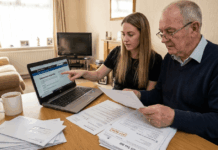
The SSI resource limit is $2,000. That number has not changed since 1989. Adjusted for inflation, it should be closer to $5,200 today. But the Social Security Administration still expects disabled and elderly applicants to hold less than two grand in countable assets to qualify for Supplemental Security Income.
Most guides treat that $2,000 cap as a footnote. I think it is the single biggest reason first-time applicants either lose eligibility or drain their savings down to nothing before they even file. It shapes every decision about the program.



This article is for someone filing an SSI application for the first time in 2026: disabled, over 65, or caring for a child with a severe condition. No prior experience with government benefits. No idea what countable income means.
How Much Does SSI Pay in 2026?
The federal benefit rate for 2026 is $994 per month for an eligible individual and $1,491 per month for an eligible couple.
That came from a 2.8% cost-of-living adjustment (COLA) applied in January 2026, bumping the individual rate up from $967 in 2025.

That $994 is a ceiling, not a guarantee. The SSA subtracts what it calls countable income from the payment. Earned income, unearned income like pensions or gifts, and even free housing can reduce the check.
State Supplements Change the Math
Some states add their own supplement on top of the federal amount. The extra payment ranges from around $10 to over $200 per month depending on where the recipient lives and their living arrangement.
Arizona, Mississippi, West Virginia, North Dakota, Arkansas, and Tennessee pay no state supplement at all.
New York, for example, pays SSI recipients in adult care facilities $1,688 per month when combining federal and state portions.
California also adds a state supplement. The gap between a state that supplements and one that does not can mean over $2,400 a year in lost income for the same qualifying person.
The $2,000 Asset Limit: A 1989 Rule Running a 2026 Program
This is the piece that trips up first-time applicants more than anything else. The SSA counts cash, bank balances, stocks, bonds, cash-value life insurance over $1,500, and most personal property.
A few things are excluded:
- The home the applicant lives in
- One vehicle
- Household goods and personal effects
- Burial plots and up to $1,500 in burial funds
- Resources held in an ABLE account or a Plan to Achieve Self-Support (PASS)
Everything else counts. If total countable resources cross $2,000 for an individual or $3,000 for a couple on the first of any month, SSI payments stop for that month.
Why the Limit Matters More Than the Payment
I would argue the $2,000 resource cap causes more financial harm than the monthly benefit solves for applicants under 50. A person who gets $994 a month but cannot build any savings beyond $2,000 is permanently one car repair away from crisis.
The SSI Savings Penalty Elimination Act, introduced in Congress as SB1234, proposed raising the limit to $10,000 for individuals and $20,000 for couples. As of mid-2026, the bill has not passed.
ABLE accounts offer a workaround. Individuals who became disabled before age 26 can save up to the annual gift tax exclusion limit in an ABLE account without it counting against the $2,000 cap. But not everyone qualifies, and not everyone knows these accounts exist.
SSI Eligibility: Disability, Age, and Income Rules
The SSA uses its own definition of disability. A condition must prevent substantial gainful activity (SGA) and be expected to last at least 12 months or result in death.
For 2026, SGA means earning more than $1,690 per month in gross wages. For blind applicants, the threshold is $2,830 per month.
Age-Based SSI Without a Disability
Seniors aged 65 and older can qualify for SSI based on age alone if income and assets fall below the limits. No disability determination needed.
This path is common for retirees whose Social Security retirement benefit is very small or who never earned enough quarters to qualify for retirement benefits at all.
Income Break-Even Points for 2026
The SSA reduces SSI payments based on countable income. The earned income break-even point for 2026 is $2,073 per month for individuals and $3,067 for couples. The unearned income break-even is $1,014 for individuals and $1,511 for couples.
The earned income formula works like this: the SSA excludes the first $65 of earned income plus a $20 general income exclusion. After that, every $2 earned reduces the SSI payment by $1.
So a person earning $1,000 a month would not lose their entire SSI check, but it would shrink.
| Category | Individual | Couple |
|---|---|---|
| Max Monthly SSI (2026) | $994 | $1,491 |
| Resource Limit | $2,000 | $3,000 |
| Earned Income Break-Even | $2,073/mo | $3,067/mo |
| Unearned Income Break-Even | $1,014/mo | $1,511/mo |
| SGA Limit (Non-Blind) | $1,690/mo | $1,690/mo |
The break-even point is where SSI payments reach $0 due to income offsets.
Filing an SSI Application: Online, Phone, or Office
SSI applications can be submitted online at ssa.gov, by calling the SSA, or by visiting a local Social Security office. Each method has trade-offs.
Documents to Gather First
The SSA will ask for a birth certificate, Social Security number, proof of income, bank statements, and medical records. Disability applicants need detailed documentation from treating physicians.
A letter from a doctor saying "patient is disabled" is not enough. The SSA wants treatment history, test results, and functional limitations.
Missing paperwork is one of the most common reasons applications stall or get denied outright. Having records organized before starting saves weeks of back-and-forth.
I Think Applying In Person Beats the Online Route
The standard advice is to apply online because it is faster. I think the in-person route at a local SSA office produces fewer errors on applications, based on the SSA's own data showing that incomplete applications are a top cause of denial.
A claims representative can catch missing fields and flag documentation gaps during the appointment. Online forms let mistakes sail through unchecked.
The trade-off is time. Office visits require scheduling and potentially long waits. But a cleaner initial application may shave months off the process compared to filing online, getting denied for missing paperwork, and restarting.
SSI Denial Rates Are High. Plan for It.
According to the SSA's 2026 Annual Report, initial allowance rates for disabled adult SSI claims have hovered around 33% in recent years.
For claims filed in 2023, roughly 65% were denied at the initial decision level. Six out of ten applicants who receive a denial never appeal.
That last number is the real problem. The appeals process includes reconsideration, a hearing before an administrative law judge, and review by the Appeals Council. Approval rates climb at the hearing level. Giving up after the first denial leaves a potential benefit on the table.
The 60-Day Appeal Window
After a denial, applicants have 60 days to file an appeal. Missing that window means starting over from scratch. New medical evidence, updated treatment records, or a more detailed functional capacity report can change the outcome.
- Request the appeal in writing within 60 days of the denial letter
- Gather any medical records created after the initial application
- Consider a disability attorney or authorized representative through NOSSCR
Attorneys in SSI cases typically work on contingency, meaning no upfront cost. They collect a percentage of back pay if the case wins.
SSI and Medicaid: The Benefit Behind the Benefit
SSI approval automatically qualifies recipients for Medicaid in most states. Given that Medicaid covers doctor visits, prescriptions, hospital stays, and long-term care, the health coverage can be worth more than the $994 monthly SSI check itself.
A few states require a separate Medicaid application even after SSI approval. Knowing which category a state falls into matters before assuming coverage kicks in right away.
SSI Plus Social Security Retirement
Some people receive both SSI and Social Security retirement benefits simultaneously. The SSA offsets payments so the combined amount stays within program limits.
Social Security retirement income counts as unearned income against SSI, so the SSI portion shrinks dollar-for-dollar after the $20 general exclusion.
Staying Eligible After Approval
The SSA conducts periodic redeterminations to verify that recipients still meet income and resource requirements. These reviews happen roughly every one to three years.
Any change in income, living situation, marital status, or resources must be reported. Failing to report a change can result in overpayments that the SSA will claw back, sometimes by reducing future checks to $0 until the balance is recovered.
Students under age 22 who receive SSI get a break: the Student Earned Income Exclusion lets them earn up to $9,730 per year in 2026 without it counting against their SSI payment. That exclusion is one of the better-designed parts of the program.
Questions People Ask About SSI Applications
These are common searches from first-time SSI applicants looking for straight answers.
- Q: Can I work part-time and still get SSI in 2026?
Part-time work is allowed. The SSA excludes the first $85 of combined income (earned and unearned), then reduces the SSI payment by $1 for every $2 earned above that. A person earning $500 a month would still receive a partial SSI check. The earned income break-even for 2026 is $2,073 monthly for individuals. - Q: Do green card holders qualify for SSI?
Certain lawful permanent residents qualify if they meet income and resource limits and have maintained continuous lawful presence for at least five years. Refugees and asylees may qualify during their first seven years of status. Rules differ by immigration category, so checking directly with the SSA is the safest step. - Q: How long does it take to get approved for SSI?
Initial decisions typically take three to six months. If denied and appealing to a hearing, the total timeline can stretch past 12 months depending on the regional hearing office backlog. Starting with a complete application and strong medical documentation shortens the initial decision window.
Conclusion
The SSI program pays $994 a month in 2026, but the real challenge is qualifying under rules written in 1989. Filing a clean application with complete medical records gives first-time applicants the strongest starting position.
A denial is not the end of the process, and six out of ten people who quit after the first rejection may be walking away from benefits they could win on appeal.
The $2,000 resource limit remains the program's most outdated feature, and knowing how to work around it through ABLE accounts or PASS plans makes a measurable difference.
Last updated on September 23rd, 2026 at 02:32 pm