
Getting paid in dollars while living in Brazil sounds great until half your earnings vanish into conversion fees and bank charges every single month.
Remessa Online global cards promise a fix for that problem. Load multiple currencies onto one prepaid Visa or Mastercard and spend abroad without the usual markup.


But a prepaid card holding foreign currency behaves differently than a regular debit card. The details matter more than the feature list on the website.
I looked at the Remessa Online global card through one lens: does the math hold up once conversion timing and ATM charges get factored in?
What Remessa Online Global Cards are and How They Work
Remessa Online is a Brazilian fintech that handles international money transfers. Their global card is a prepaid product, branded Visa or Mastercard, that lets holders spend in multiple currencies across different countries.

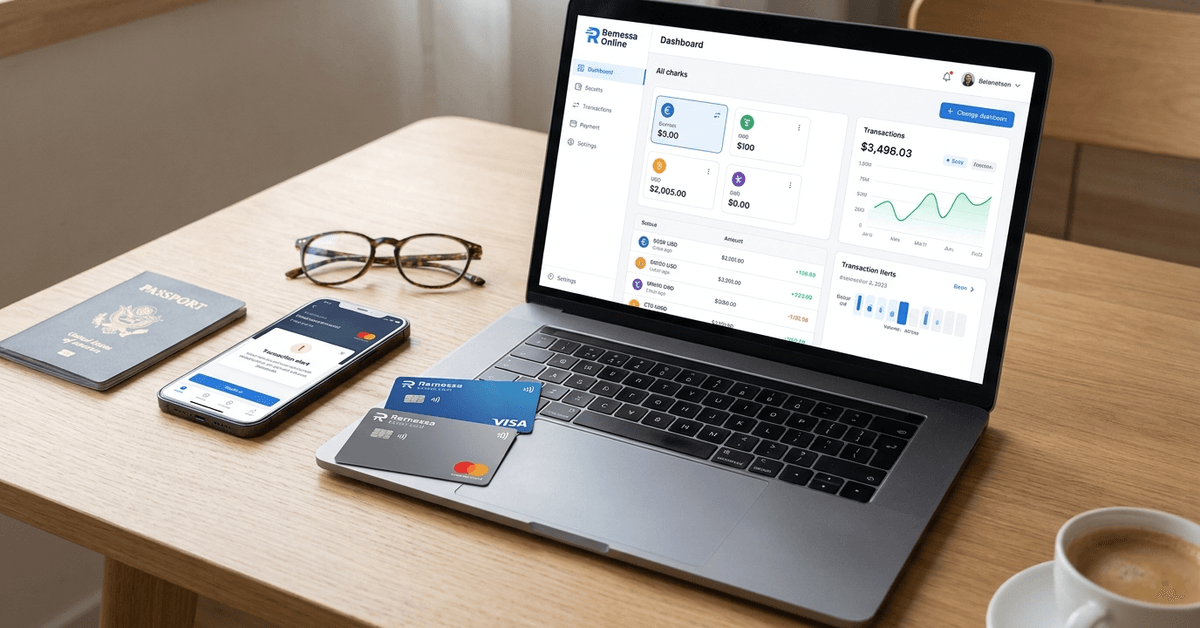
The card runs through an online dashboard. Loading funds, checking balances, freezing the card, and tracking transactions all happen through the app or web platform. No bank branch visits required.
That convenience piece is real. But the card's behavior during currency conversion and withdrawal is where things get interesting, and where the differences between this card and a standard debit card start to matter.
Multi-Currency Holding and Virtual vs. Physical Cards
The card can hold funds in more than one currency at a time. A freelancer receiving USD from a client could keep those dollars on the card and spend them directly at a US-based subscription service without converting to BRL first.
Both virtual and physical card versions exist. The virtual card handles online purchases. The physical card covers in-store payments and ATM withdrawals abroad.
Not every prepaid international card provider offers both formats, which matters if spending habits split between online and offline transactions.
How Funding, Spending, and ATM Withdrawals Work on Remessa Online
The process has a few moving parts, and each one carries a cost that sits beneath the surface. Breaking it down step by step shows where the friction hides.
Loading Money and the Conversion Timing Trap
Funding the card happens via bank transfer after registration. The transfer isn't instant. Anti-fraud verification adds a waiting period, and during that window, exchange rates can shift.
This is the part that gets overlooked in every review of Remessa Online's card. The conversion rate sometimes locks when funds are loaded, not when they're spent.
That distinction matters enormously if the BRL strengthens against the USD between the loading date and the purchase date. A 2% rate shift on a R$5,000 load erases R$100 before a single purchase happens.
My take on Remessa Online's conversion model: treating every top-up like a mini currency trade would save more money than obsessing over the conversion fee percentage.
The posted fee might be 1.5%. But rate timing swings can run higher during volatile weeks, quietly eating into the "savings" the card is supposed to deliver.
ATM Fees That Stack Up
Cash withdrawals at international ATMs carry fees from Remessa Online plus fees from the local ATM network. Those double charges make small, frequent withdrawals expensive fast.
A smarter approach: withdraw larger amounts less often if ATM access is needed. Or lean on the card for direct tap-to-pay purchases instead.
Every card payment avoids that ATM operator fee entirely, which compounds over a month of daily spending abroad.
Who Should Get a Remessa Online Global Card
The card suits certain financial situations better than others. And some people would be better served by a different tool altogether. The target user profile is narrower than the marketing suggests.
Freelancers and Remote Workers Receiving International Payments
A freelancer billing clients in USD or EUR and spending in BRL is the core use case. The card reduces the number of separate conversion steps between earning and spending.
But one thing to check on the Remessa Online website is whether inbound payments from clients can land directly onto the card.
Some prepaid card providers restrict inbound transfers to only the cardholder's linked bank account, which adds an extra step and an extra fee.
Small Business Owners Sourcing Products Abroad
Anyone buying inventory or supplies from international vendors could use this card to pay directly in the vendor's currency. The fee savings compared to wire transfers through a traditional bank add up on repeated purchases.
The limitation is spending caps. Daily, weekly, or monthly limits may restrict larger transactions. A business owner placing a $10,000 order might hit those limits and need to split the payment across multiple days, which some vendors flat-out won't accept.
Students and expats are another group that gets mentioned in every Remessa Online review, but honestly? The card's usefulness depends entirely on whether parents or family members can send funds directly to it.
If the money has to route through a domestic bank first, the convenience advantage disappears.
Remessa Online Card vs. Wise vs. Traditional Banks
Every comparison between international payment options stays surface-level when it only talks about fees. The real variable is when and how conversion happens, plus what protection the cardholder gets if something goes wrong.
| Feature | Remessa Online Card | Wise | Traditional Brazilian Banks |
|---|---|---|---|
| Conversion timing | Often at fund loading | At time of purchase | At time of purchase |
| ATM withdrawal fees | Card fee + ATM operator fee | Card fee + ATM operator fee | Usually higher fixed fee |
| Multi-currency holding | Multiple currencies | 40+ currencies | Rarely offered |
| Dispute protection | Limited (prepaid) | Limited (prepaid/debit) | Stronger (credit card chargeback rights) |
The biggest takeaway: dispute protection is the blind spot in every prepaid card comparison.
Wise and Remessa Online both offer limited recourse if a merchant overcharges or doesn't deliver. A credit card issued by a traditional bank still gives stronger chargeback rights in most jurisdictions.
Remessa Online Card: What Happens When Loaded Money Sits Idle
Prepaid international cards create a specific behavioral trap. The temptation is to load a cushion of foreign currency "just in case." But that idle money sitting in USD or EUR on the card earns nothing.
And if the BRL strengthens while those funds sit unused, the cardholder loses purchasing power without spending a cent.
I disagree with the common advice that prepaid global cards are the "safer" option for international spending. The fraud angle checks out: a thief can only drain what's loaded. But purchase protection tells a different story.
Dispute resolution on prepaid cards tends to be slower, and refund rights aren't as strong as credit card chargebacks. That tradeoff is something every Remessa Online card review glosses over, and it's the single biggest factor I'd want a freelancer to weigh.
Inactivity Fees and Forgotten Balances
Some prepaid card providers charge inactivity fees after a set dormancy period. The Remessa Online terms should be checked for this specific clause.
A card loaded with $200 six months ago that sits idle could quietly lose value to fees the holder never expected.
The smarter habit: load only what's needed for the next 30 days. Treat the card as a spending tool, not a parking lot for foreign currency.
A checklist worth running before every load onto a Remessa Online card:
- Compare the current exchange rate against the rate from two or three days ago
- Confirm daily and monthly spending limits listed in the card's terms
- Look up ATM withdrawal fees for the specific country where cash will be pulled
- Verify whether the card supports inbound payments directly or only through a linked bank
And these red flags should prompt a pause before committing to any prepaid global card:
- Monthly inactivity fees buried in the terms of service
- Conversion rates that lock at loading instead of at the time of purchase
- Limited or absent chargeback rights for disputed transactions
- No option to transfer remaining funds back to a domestic bank account without extra conversion fees
Questions People Ask About Remessa Online Global Cards
Q: Can I use a Remessa Online card for subscription services like Netflix or Spotify?
Recurring charges on prepaid cards can fail if the balance drops below the subscription amount. Keeping a small buffer loaded specifically for subscriptions avoids interruptions. Also verify that the card's issuing network (Visa or Mastercard) matches the merchant's accepted methods.
Q: Is the Remessa Online global card available outside Brazil?
Remessa Online primarily targets Brazilian residents and CPF holders. Non-residents may face restrictions during registration. The app and platform are built for users sending or receiving money through Brazil.
Q: How long does it take to receive a physical Remessa Online card?
The virtual card usually activates within minutes after account verification. Physical card delivery depends on the cardholder's location, typically running 7 to 15 business days domestically. Plan around the virtual card if timing is tight.
Q: Are Remessa Online card balances protected if the company goes bankrupt?
Prepaid card funds are not covered by the FGC (Fundo Garantidor de Créditos), Brazil's deposit guarantee fund. Protection depends on how Remessa Online structures its custodial accounts. Reading the cardholder agreement for details on fund segregation is a good precaution before loading large amounts.
Q: Does the card support less common currencies like Japanese yen?
Currency availability depends on Remessa Online's supported list, which changes periodically. Major currencies like USD, EUR, and GBP are typically available. Less common currencies may require conversion through an intermediary step, which adds a fee layer.
Conclusion
Remessa Online global cards solve a real problem for freelancers juggling payments across multiple currencies daily. The conversion timing question matters far more than the posted fee percentage on any single transaction.
Loading only what gets spent within 30 days prevents the idle-balance trap that catches careless users. A backup credit card for purchase disputes fills the one protection gap prepaid cards cannot cover.
Last updated on June 18th, 2026 at 03:06 pm