
That monthly Verizon bill hitting your bank account is predictable but never painless. The Verizon Visa Credit Card turns a piece of that spending into cash back rewards.
Every review out there calls this card an obvious pick for Verizon customers. I think that consensus misses the Verizon Dollars redemption lock, where all rewards stay trapped inside one company's ecosystem.


The Verizon Visa Credit Card earns up to 4% back on groceries and gas, plus 3% on dining. The 2% on Verizon purchases gets the headline space, but it may be the least compelling feature.
That mismatch between marketing and math shapes who this card works for. And it changes the application decision entirely.
Cash Back Rates on the Verizon Visa Card
The earning structure on this card is category-based. Different rates attach to different spending types, and the tiers center around purchases people repeat daily or weekly. This is a card built for routine spenders, not luxury travel collectors.
The rate breakdown:
- 4% cash back on grocery store purchases and gas stations
- 3% cash back on dining, including restaurants and takeout
- 2% cash back on Verizon purchases: monthly bills, devices, and accessories
- 1% cash back on everything else
No annual fee comes attached. That zero-fee structure means the card costs nothing to hold during slow spending months, which removes one of the usual pain points of category-based rewards cards.
Does the 4% Grocery and Gas Rate Hold Up?
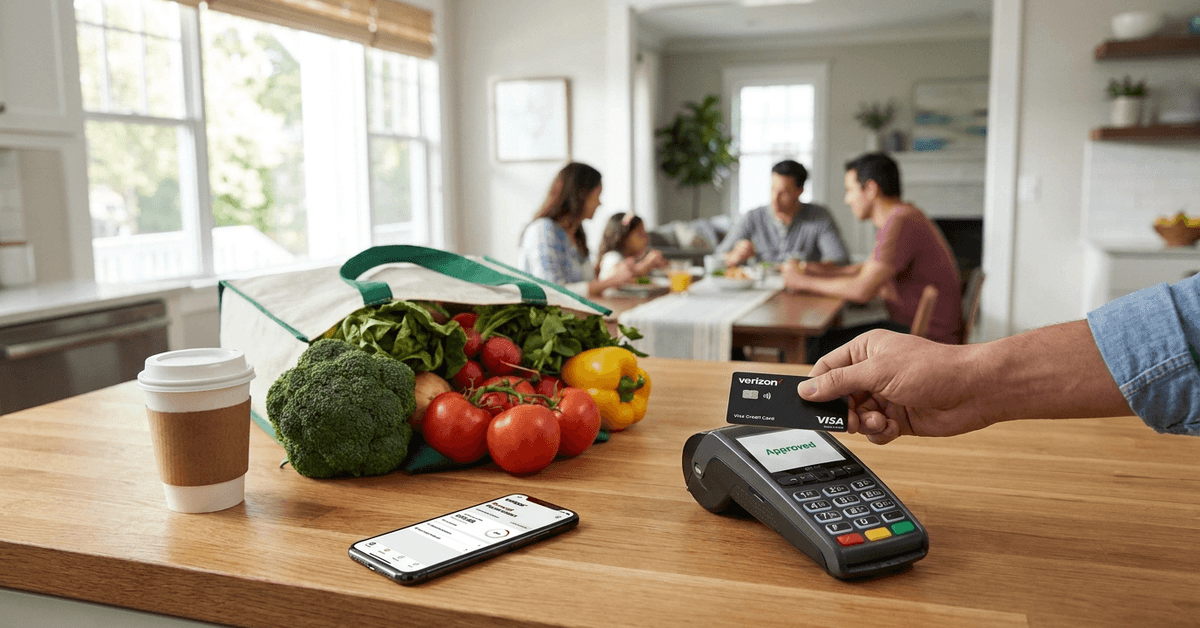
The 4% tier on groceries and gas is the strongest earning rate on this card. For a household spending $600 per month across those two categories, the return comes out to roughly $24 per month or close to $288 per year in Verizon Dollars.
That rate competes directly with the Blue Cash Preferred from American Express, which offers a similar grocery percentage but carries a $95 annual fee.
The Verizon Visa charges nothing, making the net return stronger for families who don't want to pay for rewards upfront.
I would argue the 4% grocery and gas rate is the real reason to carry this card, not the Verizon bill credits that get top billing in the marketing. The math favors the everyday spend categories over the branded perk.
Dining Cash Back at 3% on the Verizon Visa
Dining at 3% falls in the middle of what no-annual-fee cards offer. The Verizon Visa includes takeout alongside sit-down restaurant purchases, which stretches this category further than cards that only count dine-in transactions.
For anyone ordering delivery regularly or eating out on weekends, the 3% rate compounds over a full year. Keep in mind: these earnings also convert to Verizon Dollars, so the same redemption limits apply here too.
Verizon Dollars: Rewards or Handcuffs?
All cash back earned on the Verizon Visa Card flows into the Verizon Dollars program through the My Verizon Rewards portal.
These can be applied toward monthly Verizon bills, device purchases, or select accessories. The system is simple once it's set up.
But the simplicity has a cost. Verizon Dollars cannot be transferred to a bank account, turned into gift cards, or spent anywhere outside of Verizon's product lineup. There is no cash-out option.
For a loyal Verizon customer locked into a long-term family plan, this might not feel restrictive. For everyone else, it raises a question few reviews bother asking: what are your rewards worth if you ever leave?
What Happens to Verizon Dollars If You Switch Carriers?
Switching to T-Mobile, AT&T, or any other provider leaves accumulated Verizon Dollars sitting in an account tied to a service that no longer exists for you. The rewards don't convert. They sit idle.
I think this creates a hidden switching cost that extends beyond the phone plan itself. The Verizon Visa Card, through its Verizon Dollars program, builds a financial incentive to stay with Verizon even when a competitor offers a cheaper wireless deal.
That switching cost angle doesn't appear in other card reviews I've read, and it changes the value calculation for anyone who moves between carriers more often than every few years.
This is the part where "free rewards" start looking less free. The 2% on Verizon bills is only a clean win if you never plan to leave. And how many people can say that with confidence about a phone carrier in 2026?
Verizon Visa Card Compared to Flat-Rate Cash Back Cards
The 2% on Verizon purchases is the feature that gets positioned as the card's defining advantage. But a side-by-side comparison tells a different story. The table below puts the Verizon Visa next to two popular flat-rate alternatives.
| Feature | Verizon Visa Card | Citi Double Cash | Wells Fargo Active Cash |
|---|---|---|---|
| Annual Fee | $0 | $0 | $0 |
| Verizon Bill Rate | 2% (Verizon Dollars) | 2% (cash) | 2% (cash) |
| Grocery/Gas Rate | 4% | 1% | 2% |
| Dining Rate | 3% | 1% | 2% |
| Redemption Options | Verizon ecosystem only | Cash, statement credits | Cash, statement credits |
The Verizon Visa wins on grocery and gas spending by a wide margin.
But for Verizon bill payments specifically, a flat-rate 2% card like the Citi Double Cash returns the same percentage in unrestricted cash. That comparison matters for people who want spending flexibility.
The Verizon card earns more on groceries and gas, but the rewards are locked. A flat-rate card earns less in those categories but gives full control over how the cash back gets used.
My take on the popular advice that Verizon customers should "automatically" grab the Verizon Visa: skip the card if the Verizon bill credit is your primary motivation.
The 2% Verizon rate matches the Citi Double Cash on that exact same spending, and the Citi card pays in real cash. The Verizon Visa only makes sense when the 4% grocery and gas tier is doing the heavy lifting.
Getting Approved for the Verizon Visa Card
The card is issued by Synchrony Bank, not Verizon directly. The application is available through Verizon's official credit card page or Synchrony's website.
The application has a few requirements worth checking first:
- A valid Verizon Wireless account is required before applying
- Synchrony generally requires good to excellent credit for approval
- Decisions often arrive within minutes after submission
- The card carries a variable APR, which can run steep if balances carry over month to month
Credit Score and Account Requirements for the Verizon Visa
Synchrony Bank's underwriting requires good to excellent credit, but no publicly stated minimum score exists. Having an existing Verizon account in good standing may help, though approval depends entirely on individual creditworthiness.
Checking a free credit monitoring tool before applying can save an unnecessary hard inquiry. If your score falls below the good range, applying could ding your credit without a card to show for it.
One detail about Synchrony: their card management app and customer support operate differently from larger issuers like Chase or American Express.
Dispute resolution and account access may feel less polished. Synchrony's digital tools are functional but less refined than what major bank cardholders are used to, so plan for a slight learning curve.
Smart Ways to Stack Verizon Visa Card Rewards
The biggest returns come from routing the right spending categories to this card and using a flat-rate alternative for everything else. This is a two-card strategy, and it takes about five minutes to set up.
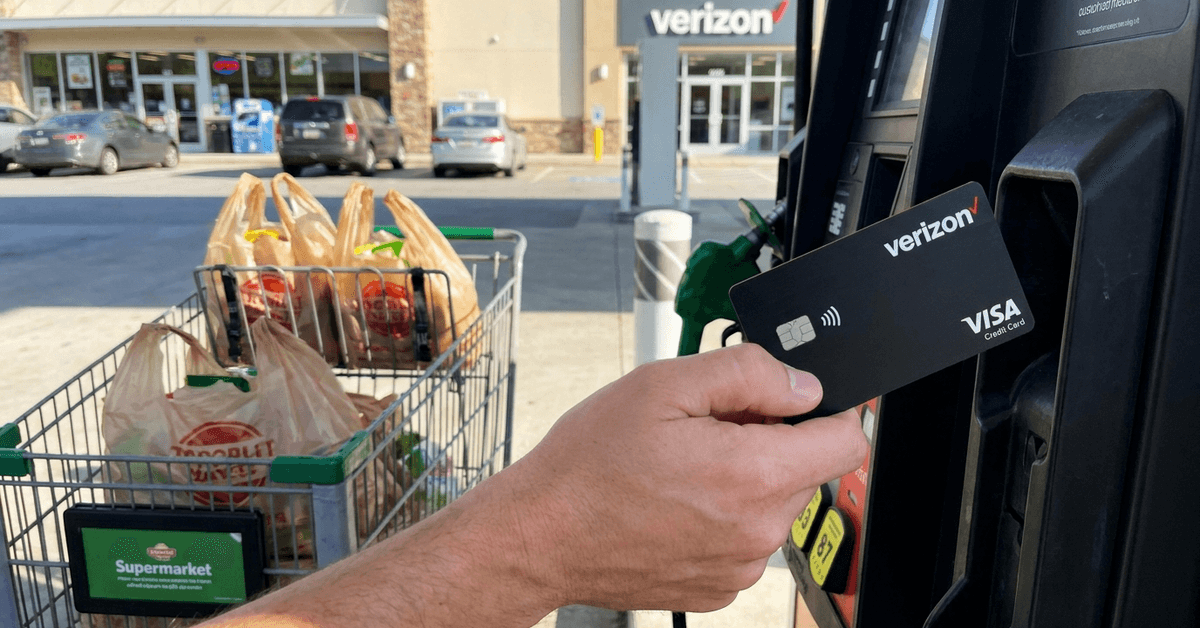
Putting all grocery, dining, and gas purchases on the Verizon Visa captures the top earning rates.
Applying Verizon Dollars toward monthly bills each cycle turns small percentages into a noticeable annual reduction. And checking for seasonal Verizon promotions or bonus offers can squeeze extra value during specific periods.
Cardholders on larger Verizon family plans with multiple lines see the biggest cumulative benefit. A plan with three or four lines generates enough monthly billing to make the 2% Verizon rate more meaningful than it is for a single-line user.
The card also has no minimum redemption threshold mentioned in the current terms, so even small accumulations can be applied each billing cycle rather than sitting unused for months.
Questions People Ask About the Verizon Visa Credit Card
Q: Can I use Verizon Dollars anywhere outside of Verizon?
No. Verizon Dollars are limited to Verizon bills, devices, and accessories. There is no option to convert them to cash, gift cards, or spend them at other retailers. Redeem them before canceling any Verizon service.
Q: Does the Verizon Visa Credit Card charge an annual fee?
The card has no annual fee, making it low-risk to hold even during light spending months. That zero-fee structure separates it from premium grocery cards like the Amex Blue Cash Preferred, which charges $95 per year.
Q: What credit score is needed for the Verizon Visa Card?
Synchrony Bank requires good to excellent credit, though no specific minimum is published. Checking a free credit score tool before applying helps avoid a wasted hard inquiry on your credit report.
Q: What happens to my Verizon Dollars if I switch carriers?
Once a Verizon account closes, the Verizon Dollars tied to it become essentially unusable. The safest move is redeeming all accumulated rewards before canceling wireless service or switching to another provider.
Q: Is the Verizon Visa Card worth it without heavy grocery or gas spending?
The 4% rate on groceries and gas drives the strongest returns on this card. Without regular spending in those categories, the earning rate drops closer to 1-2%, which a flat-rate cash back card matches without any redemption restrictions.
Conclusion
The Verizon Visa Credit Card fits best for customers with steady grocery and gas spending each month. The 4% cash back rate on those categories beats many no-annual-fee alternatives available right now.
Treat the Verizon bill credits as a side benefit, not the central reason to carry this card. A flat-rate 2% card may work better for anyone who might switch wireless providers soon.
Last updated on June 18th, 2026 at 03:06 pm