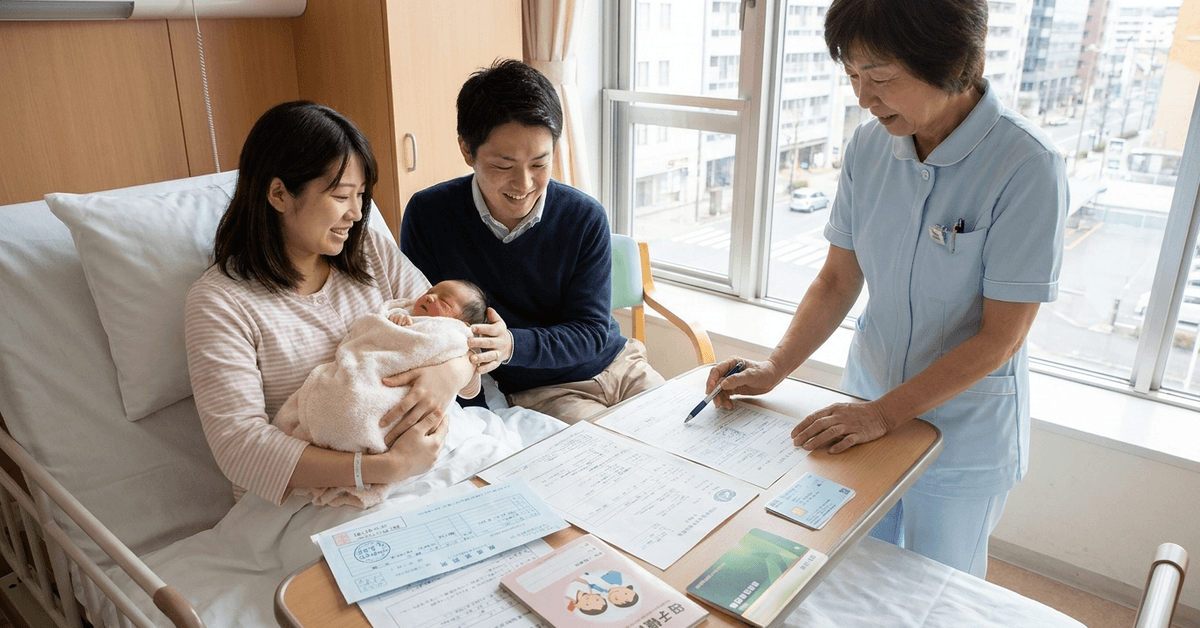
The Shusan Ikuji Ichijikin pays ¥500,000 per child. The average normal delivery in Japan cost ¥519,805 in fiscal 2024. That math leaves a gap, and if you're delivering in Tokyo, the gap is closer to ¥150,000.
Almost every guide about Japan's childbirth grant treats it as a generous windfall. It was generous when it launched in 1994 at ¥300,000 and delivery costs were lower. The grant has been chasing rising hospital fees ever since.



This article is for foreign residents and first-time parents enrolled in Japanese public health insurance who need to plan the financial side of having a baby, not just celebrate a benefit that may fall short of their bill.
Why the ¥500,000 Number Can Be Misleading
The government raised the lump sum from ¥420,000 to ¥500,000 in April 2023. On paper, that looks like a solid bump. But hospital pricing tells a different story.
Regional Cost Gaps Eat the Grant
Delivery fees in Japan vary wildly by prefecture because hospitals set their own prices for normal births. Normal childbirth falls outside the public health insurance system. It is not classified as a medical condition.
A delivery in Kumamoto Prefecture runs roughly ¥400,000. The same delivery in Tokyo averaged ¥648,000 in 2024. That is a ¥248,000 difference for the same medical event in the same country.
I would argue that choosing your delivery location is a bigger financial decision than most expecting parents in Japan realize, especially for Tokyo residents facing a potential ¥148,000 out-of-pocket bill after the grant.
About 45% of all deliveries nationwide already cost more than the ¥500,000 allowance, according to Health Ministry data collected between May 2023 and September 2024.
Cesarean Sections: A Different Billing Lane
C-sections are classified as medical procedures. They do receive partial health insurance coverage. But parents still pay 30% of the covered cost out of pocket.
Add private room fees and extended hospitalization, and a C-section bill can reach ¥668,000 or more before the grant is applied.
The grant still offsets a big chunk. But the remaining balance depends heavily on your insurance type and whether you qualify for the high-cost medical expense system (kōgaku ryōyōhi seido), which caps monthly out-of-pocket costs for insured procedures.
Eligibility for Japan's Childbirth Grant
The requirements are straightforward for most parents. But a few edge cases catch people off guard.
Who Qualifies for the Shusan Ikuji Ichijikin
Enrollment in Japanese public health insurance at the time of birth is the baseline requirement.
This means either National Health Insurance (kokumin kenkō hoken) or Employees' Health Insurance (shakai hoken). Both Japanese nationals and foreign residents qualify.
The grant covers:
- Live births at accredited hospitals and clinics
- Stillbirths after 12 weeks of pregnancy
- Miscarriages after 12 weeks, in some cases
- Births abroad, if both parents are enrolled in Japanese health insurance at the time (stricter documentation required)
Cases That Get Complicated
Home births and deliveries at non-accredited facilities may not qualify.
Dual insurance coverage situations, like when both spouses carry separate employer-based plans, can trigger administrative reviews. These cases are rare, but they create real delays when they come up.
Applications must be submitted within two years of delivery. Missing this window means forfeiting the grant entirely.
Direct Payment vs. Reimbursement: Pick the Right Path
Two application routes exist, and the one available to you depends on your hospital.
The Direct Payment System (Chokusetsu Shiharai)
Under this system, your hospital receives the ¥500,000 directly from your insurer. If delivery costs less than ¥500,000, the difference comes back to you. If it costs more, you pay only the balance at discharge.
This is the default at most major hospitals and the option I would pick over reimbursement every time, because it eliminates the cash-flow crunch of paying ¥500,000+ upfront.
Smaller clinics and rural facilities sometimes lack this setup, so confirm during your first prenatal visit.
Standard Reimbursement
Parents pay the full hospital bill, then file a claim with their health insurance provider. Processing takes several weeks. Some parents in rural areas report faster turnaround; others in busier municipal offices wait longer.
Required documents for reimbursement claims:
- Birth certificate or equivalent official record
- Mother's health insurance card
- Hospital receipt proving payment
- Completed application form from your insurer
- Bank account details for deposit
| Feature | Direct Payment | Reimbursement |
|---|---|---|
| Upfront cost to parent | Only the balance above ¥500,000 | Full delivery bill |
| Processing | Handled between hospital and insurer | Parent files claim after discharge |
| Cash-flow pressure | Low | High |
| Availability | Most major hospitals | All accredited facilities |
The direct payment system removes the financial stress of coming up with hundreds of thousands of yen at discharge.
The 2026 Policy Shift That Could Replace This Grant Entirely
Japan's Health Ministry approved a plan in May 2025 to fully cover normal childbirth under public health insurance.
The original target was April 2026. A December 2025 update pushed the timeline: the government now plans to submit legislation for a rollout in fiscal 2027 or later.
What Changes Under Full Insurance Coverage
If the plan passes, a standardized nationwide delivery fee would replace the current system where hospitals set their own prices.
The ¥500,000 lump-sum grant would be abolished. Normal deliveries would be treated like any other insured medical procedure.
Epidurals are expected to remain outside coverage, though Tokyo began subsidizing painless deliveries separately in fiscal 2025, covering up to ¥100,000 for residents.
Why This Matters Right Now
The grant remains fully in effect through at least fiscal 2026. But the transition means expecting parents should track this legislation closely.
If full coverage launches by 2027, the direct payment system and reimbursement process described above will become irrelevant. For parents delivering in 2026, nothing changes. Apply for the grant as normal through Japan Health Insurance Association.
For those planning pregnancies in 2027 and beyond, the financial math could shift dramatically. The Ministry of Health, Labour and Welfare posts updates on the timeline.
Tax Treatment and Common Mistakes
The grant is non-taxable income in Japan. Parents do not need to report it on their tax filings, and it does not affect income calculations for other benefits.
This applies whether the grant is paid through employer-based insurance or National Health Insurance.
Three mistakes trip up first-time applicants more often than anything else:
- Waiting too long to confirm your hospital's payment system. Some clinics require advance paperwork for the direct payment route. Asking at your first prenatal appointment saves last-minute scrambling.
- Assuming the grant covers everything. Nationally, the average delivery already exceeds the grant. Budget for at least ¥20,000 to ¥150,000 above the grant depending on location and facility type.
- Forgetting the two-year deadline. Especially relevant for parents who leave Japan shortly after delivery. Filing before departure is possible and strongly recommended.
Questions People Ask About Japan's Childbirth Grant
These come up constantly in parent forums and municipal office waiting rooms.
- Q: Does the Shusan Ikuji Ichijikin double for twins?
Yes. The grant is paid per child. Twins receive ¥1,000,000 total. Triplets receive ¥1,500,000. The multiplier applies regardless of delivery method. - Q: Can I get the grant if my baby is born outside Japan?
Potentially. Both parents need active Japanese public health insurance at the time of delivery. Documentation requirements are stricter, and only births at recognized foreign medical facilities qualify. Check with your insurer before traveling. - Q: Do I need to speak Japanese to apply?
Some health insurance funds now provide forms in English and other languages. Municipal offices in cities like Tokyo, Osaka, and Yokohama often have multilingual support staff. Smaller offices may not, so bringing a translator or Japanese-speaking friend can speed things up.
Conclusion
Japan's ¥500,000 childbirth grant still offsets a large portion of delivery costs for most families. The gap between the grant and real hospital bills keeps growing, especially in Tokyo and other urban prefectures.
Parents planning deliveries in 2026 should apply through the direct payment system and budget for costs above the grant. A major overhaul of how Japan funds childbirth is coming, and tracking the insurance coverage timeline could save future parents even more.